What happens to love when one person chooses another lifetime—and the other does not?
Director: Henk Pretorius
Screenplay: Henk Pretorius
Released: 2023
Running time: 100 minutes
Rating: Not rated
Starring: Diana Quick, Bernard Hill, Amy Tyger, Mark Jackson, Stephanie Beacham, Anna Wolf, and Julian Glover
This introduction explains the film’s central premise and relationship conflict, but does not reveal its final choice or resolution.
A choice between youth and a shared life
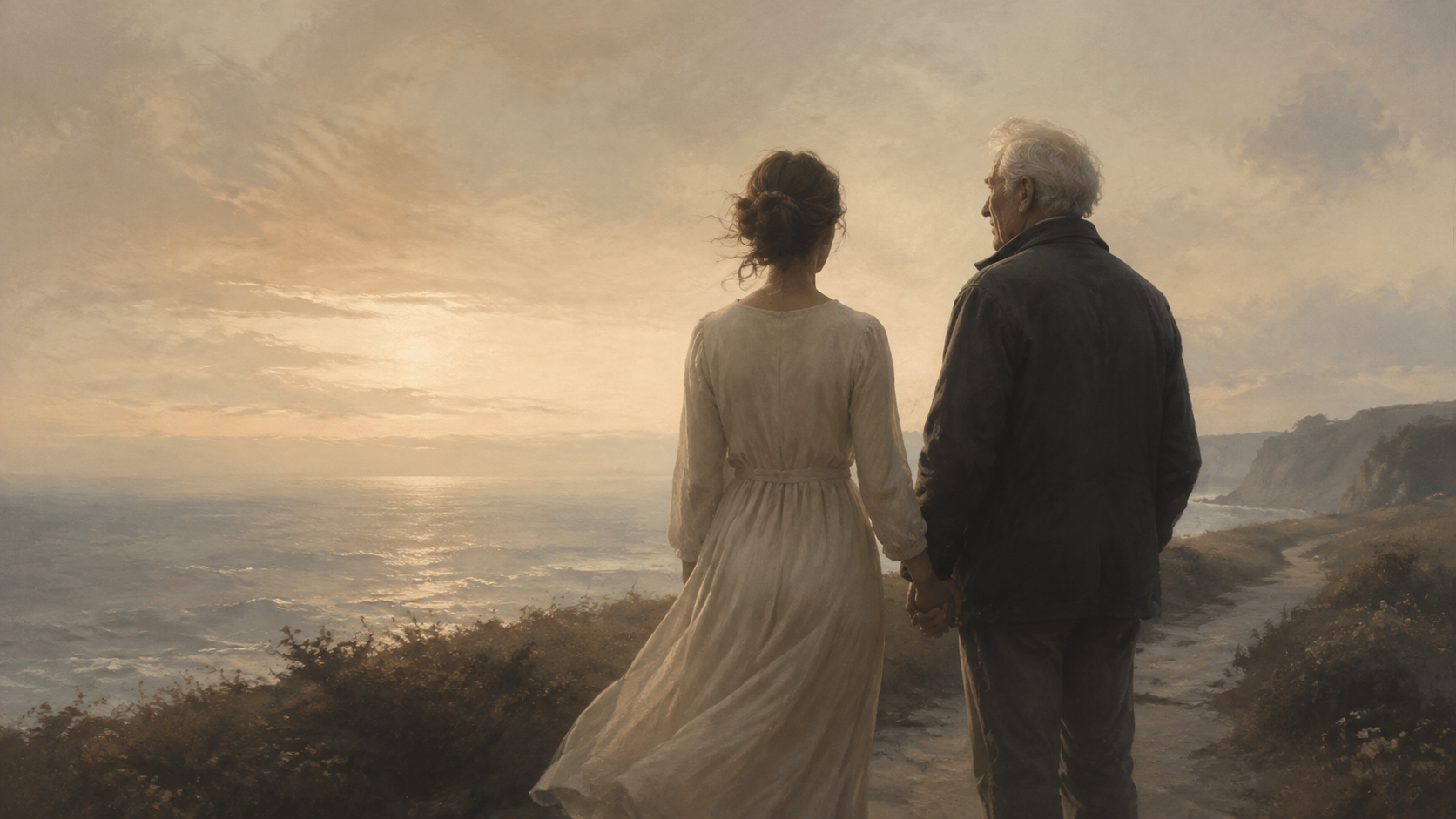
Forever Young follows Robyn Smith, a successful seventy-year-old writer whose life appears settled. She has a loving husband, Oscar, and decades of shared history. Yet she remains haunted by a path she did not take and by the child she never had.
An encounter with an old flame introduces an extraordinary possibility: a formula that can reverse biological aging. Robyn could become young again, recover possibilities that time seemed to have closed, and begin another chapter of life in a body capable of living it.
Oscar does not want the treatment. He does not see their life together as something that needs to be corrected or repeated. He has grown old beside Robyn, loves the years they shared, and accepts that his life has an ending.
The formula therefore creates more than a medical decision. Robyn is not choosing youth in isolation. She is choosing whether to continue into a future that Oscar may refuse to enter.
That is enough to enter the film’s central conflict. The consequences of Robyn’s opportunity are best considered without knowing which future she ultimately chooses.
When longevity becomes a relationship decision
For most of human history, growing old has not been a decision. Neither has death. We may delay both, but the biological body eventually fails.
Because this fate is shared, something fundamental about love has usually been taken for granted: we grow old together. One partner may die earlier, but both move through time in the same direction.
Reliable rejuvenation would break that symmetry. One person could return to a young body while the other continued toward death. A choice that appears to concern one body would divide a shared life into two possible futures.
This is where Forever Young connects with Humanity Unfinished. The film does not imagine consciousness leaving biology. Its characters still need flesh, and rejuvenation simply resets the body’s biological clock. Yet it raises a question that could survive every form of radical longevity: what happens when continuing to exist becomes a choice two people do not make together?
When death begins to resemble leaving
Today, if a spouse dies at eighty-five, the person left behind may feel grief, anger, or abandonment, but cannot reasonably say that death was a rejection of the relationship. Biology made the decision.
In a world where a safe treatment could add another century of healthy life, refusing it might feel different. A partner could hear “I have lived enough” as “another hundred years with you are not worth living.” That interpretation may be unfair, but it would be understandable.
Life extension would therefore create a new kind of responsibility. We often describe longevity as an individual choice: my body, my life, my decision. Human lives, however, are held inside relationships. A decision to continue—or not to continue—changes the lives of spouses, children, parents, and friends.
Love should not require a person to exist forever because someone else cannot bear to lose them. But the opposite conclusion is difficult too. If continued life became readily available, bereavement might acquire a question it rarely contains today: why did you choose to leave me?
Can marriage survive several lifetimes?
“Till death do us part” was created in a world where death provided a natural boundary. Even a marriage lasting sixty years occupies one human lifetime. A three-hundred-year life could contain what we now think of as several lives.
Would a promise made at twenty-five still bind someone at two hundred and fifty? Could two people remain compatible through centuries of new careers, cultures, bodies, beliefs, and identities?
Perhaps marriage would become renewable: a commitment made for fifty years and consciously chosen again. Perhaps lifelong monogamy would become more meaningful because it had become extraordinarily difficult. Or perhaps a relationship could be complete after a century without being considered a failure.
In Can Love Survive Forever?, we asked whether love could endure centuries of change. Forever Young introduces an earlier problem. Before love can survive forever, two people must first agree that they want forever—or at least another lifetime—at all.
The right to continue—and the right to stop
The question also works in reverse. Imagine living for three hundred years and eventually deciding that your life feels complete. Someone who loves you wants another century together and asks you to rejuvenate again.
Would love give them any claim on your future? Would you owe them more time? Could immortality turn attachment into a reason a person is never permitted to stop?
Human beings have spent thousands of years imagining the defeat of death. We have spent less time asking whether a radically long-lived person should retain the right to choose an ending. A humane future would need to protect both choices: the freedom to continue and the freedom to decide that a life is complete.
Different bodies, the same unfinished question
The technology in Forever Young is biological, but the relationship problem extends beyond biology. Imagine consciousness migrating into an artificial body or a digital form. One partner chooses to continue. The other refuses.
The technology has changed. The question has not: I want to continue existing, and you do not. What happens to us?
Technologies that defeat aging would not simply give existing relationships more time. They would change what commitment, grief, abandonment, and death mean. The greatest disruption might occur not inside the human body, but between human beings.
Questions to consider
- If your partner declined another century of life, would you experience that choice as acceptance—or abandonment?
- Does love create an obligation to keep living, or an obligation to respect another person’s limits?
- Should marriage remain a lifetime promise if a lifetime can last for centuries?
- Could a relationship end after a hundred years without being considered a failure?
- Should an immortal person have an unconditional right to stop living?
- Would unequal biological ages change the balance of power inside a relationship?
- Can two people choose different lifespans without diminishing the love they shared?
Forever Young is not primarily a film about escaping the biological body.
It is a film about discovering that once longevity becomes optional, love must negotiate something it has never had to negotiate before: not only how two people live together, but how long each person chooses to exist.
Film details and central premise verified with Vision Films and Dances With Films, where the film premiered under the title Forever Now.
[…] on this site: Forever Young (2023), which puts the same refusal inside a marriage. This essay belongs to the open question If life […]