What if machines were not merely tools created by life, but a form of life capable of building civilizations, carrying ancient conflicts, and searching for a future among the stars?
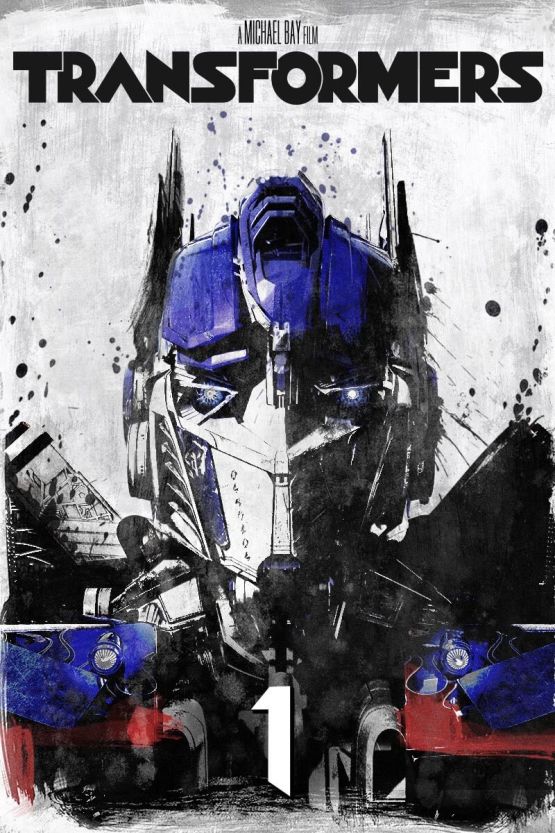
Life from another world
Transformers begins with the idea that intelligent mechanical life did not originate on Earth. The Autobots and Decepticons come from Cybertron, a distant world shaped by a civilization of transforming robots.
Their bodies are machines, but they are not presented as equipment. They possess memory, loyalty, fear, ambition, moral judgment, and a history extending far beyond human civilization. They form alliances, follow leaders, disagree over power, and carry the consequences of their conflict from one planet to another.
That conflict reaches Earth because both sides are searching for the AllSpark, a source of extraordinary power connected to the origin and future of their species. A clue to its location becomes entangled with the life of teenager Sam Witwicky, who discovers that his first car is Bumblebee, an Autobot in disguise.
The film then brings an ancient nonhuman struggle into an ordinary human world. Cars, aircraft, communication systems, and military technology become the surfaces beneath which another form of life has been hiding.
Machines that are already alive
Many stories about artificial intelligence begin with humans creating a machine and asking whether it might someday become conscious. Transformers begins somewhere else: the machines are already conscious, already ancient, and already more technologically capable than the humans who encounter them.
This changes the question. Instead of asking whether a human-made object can become alive, the film asks whether life itself must be biological.
Perhaps the boundary between organism and machine tells us more about human habit than about life.
The inhabitants of Cybertron reproduce their culture through memory, language, purpose, and relationship. Their metal bodies can change form, endure environments that would destroy human beings, and travel across interstellar distances. Yet their strength does not make them complete. Like humanity, they remain divided over what power is for and what kind of future should follow from it.
A civilization does not outgrow conflict automatically
The Autobots and Decepticons are products of an extremely advanced civilization. Their technology exceeds anything available on Earth, but technological achievement has not eliminated rivalry, domination, sacrifice, or war.
This is one of the film’s most durable ideas. Progress in capability is not the same as progress in wisdom. A species may master transformation, space travel, and extraordinary energy while carrying old divisions into every new environment it reaches.
Humanity often imagines that a sufficiently advanced future will solve the conflicts of the present. Transformers suggests a less comforting possibility: power enlarges the consequences of the values that wield it. If a civilization does not learn how to live with difference, its inventions may simply allow its conflict to travel farther.
When one planet is no longer enough
Cybertron’s crisis does not remain confined to Cybertron. Its survivors look outward, and another planet becomes part of their unfinished history.
That movement connects the film directly with a question humanity may eventually face. If intelligence survives long enough, planetary boundaries may cease to be permanent. Civilizations may leave damaged worlds, seek resources elsewhere, or carry their political and moral conflicts into space.
Interstellar travel would not automatically make a civilization peaceful. It might only give its unresolved struggle a larger stage.
A personal note
When I first watched Transformers, I did not experience its premise as absurd or merely fantastic.
I could imagine a future point at which an entire planet’s living inhabitants might be robots. They could have their own civilization and their own conflicts; those conflicts could become the cause of their wars; and eventually they might possess both the need and the ability to search for another planet.
What stayed with me was not only the spectacle of transforming machines. It was the possibility that mechanical life could inherit the same unfinished condition we see in humanity: intelligence without final wisdom, immense ability without agreement about how it should be used, and a future that must be chosen rather than merely reached.
That intuition became one of the ideas that feels at home in Humanity Unfinished.
The robots as descendants, not replacements
It is easy to frame a future of machines as the disappearance of humanity. But another interpretation is possible. If human beings eventually create minds that can endure longer, travel farther, and inhabit conditions biology cannot survive, those minds may carry something of human history beyond the human body.
They would not necessarily be copies of us. They might become a new branch of intelligence with their own identities, loyalties, and failures. They could preserve qualities we value while also inheriting conflicts we failed to resolve.
This possibility sits at the center of Humanity Unfinished. The future of intelligence may not belong to one permanent form. Humanity may be a stage in a longer process rather than its final destination.
More power, still unfinished
The Transformers can alter their bodies, cross space, and survive forms of damage that would end a human life. By many measures they are what an enhanced species might hope to become.
Yet their story is not what comes after imperfection. They remain unfinished because no amount of physical capability can settle the question of how power should be used.
The Autobots’ restraint and the Decepticons’ hunger for domination show two futures emerging from similar abilities. Technology expands what is possible; character and collective choice determine what becomes real.
Questions to consider
- Must life be biological, or can a machine be a genuine organism?
- If robots formed a civilization, what would make them a species rather than a collection of products?
- Would advanced technology reduce conflict—or amplify the consequences of unresolved values?
- Can a civilization leave its planet without carrying its wars with it?
- If machine intelligence survives humanity, would it replace us or continue part of our story?
- What responsibilities would creators have toward mechanical beings capable of choosing their own future?
- Does the ability to transform the body bring a being any closer to moral maturity?
Transformers is often remembered as a story of enormous machines and spectacular battles.
Beneath that spectacle is a larger possibility: life may outgrow biology, intelligence may travel beyond its first world, and even the most powerful beings may remain unfinished.
Film details and official synopsis verified with Paramount Pictures.